Table of Contents
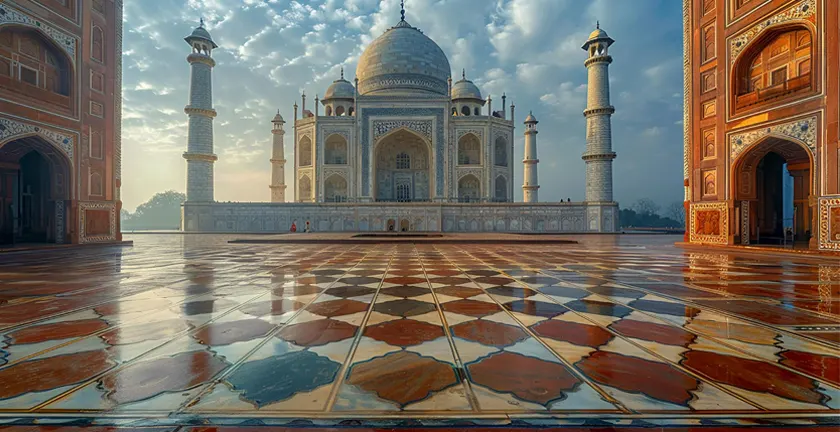
There is nothing like the sight of the Taj Mahal emerging into view through the gateway for the very first time. While you may have viewed countless photos of the magnificent structure, there is no substitute for experiencing its beauty firsthand at the break of dawn.
Commissioned by the Mughal Emperor Shah Jahan as a tribute to his beloved wife Mumtaz Mahal, the Taj Mahal is not only India’s most iconic monument but one of the world’s greatest architectural wonders. The UNESCO World Heritage Site has also been named one of the New Seven Wonders of the World, but what sets it apart from all other monuments is its ability to evoke emotion.
Situated in the city of Agra in the state of Uttar Pradesh, the Taj Mahal draws millions of tourists every year, some out of curiosity for its historical significance, others purely on aesthetic grounds.
The guide provides all that you need to know before your visit – timings, entry fees, transportation options, accommodation, food, mistakes to avoid, and a 2-day Agra tour plan.
Whether you are considering a day trip from Delhi to Agra or exploring the North India heritage route that includes Agra, this guide has it all for you when visiting the Taj Mahal. For tourists who want to explore Agra along with other popular destinations in India, Dazonn Travels also provides tailor-made India tour packages.
What Is the Taj Mahal and Why Is It Famous?
The Taj Mahal is a memorial built using white marble stones that was erected by Mughal Emperor Shah Jahan for his dear wife, Mumtaz Mahal. The Taj Mahal is located in Agra on the banks of the river Yamuna and is regarded as a prime example of Mughal architecture.
The factors that contribute to the fame of the Taj Mahal are :
The trip to the Taj Mahal becomes an adventurous journey, encompassing everything from history, architecture, photography, and culture.
History of the Taj Mahal
The history of the Taj Mahal is associated with the Mughal Empire and the personal lives of Shah Jahan and Mumtaz Mahal.
Who Built the Taj Mahal?
The Taj Mahal was constructed by Mughal Emperor Shah Jahan to commemorate the memory of his wife, Mumtaz Mahal, who had breathed her last in the year 1631. According to historical documents, it is presumed that the emperor desired to create a monument in memory of his wife that not only commemorated his love but also depicted his artistic skills.
Why Was the Taj Mahal Built?
According to legends, Mumtaz Mahal died giving birth to her child while she accompanied her husband on a military campaign. Afterward, the emperor commanded the construction of a mausoleum dedicated to his wife and named it the Taj Mahal.
The Taj Mahal was a mausoleum as well as an epitome of paradise and perfection of Mughal arts.
Construction Timeline of the Taj Mahal
Taj Mahal construction started sometime in 1632. While the major structure of the tomb was erected by 1648, some areas, like the garden, gateways, mosque, and others, needed a few extra years to be constructed.
The Taj Mahal construction involved :
- Hundreds of thousands of laborers and artisans
- Stones of marble from Rajasthan
- Gemstones from all over
- Architectural influence from Persia, Islamic style, and Indian architecture
Today, Taj Mahal stands out as one of the most significant historical monuments in the world.
What Is the Real Name of the Taj Mahal?
The structure is commonly referred to as the Taj Mahal. It is speculated that the term originated from “Mumtaz Mahal,” which was the designation given to Shah Jahan’s wife.
The name Taj Mahal has become world-famous as an epitome of love, culture, and the legacy of Mughal architecture after years of history.
Who Is Buried in the Taj Mahal?
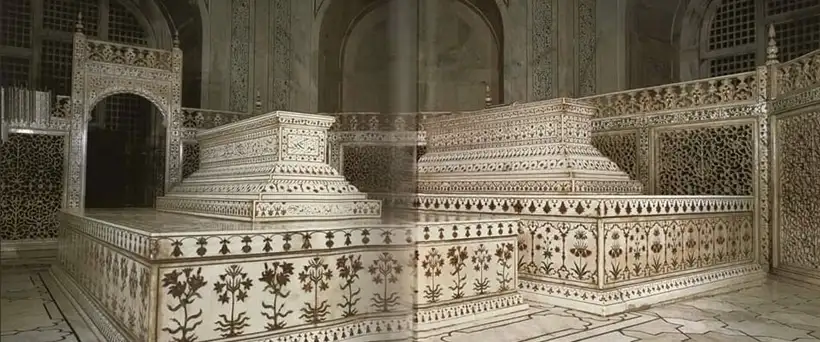
The tombstones inside the Taj Mahal include :
- Mumtaz Mahal
- Shah Jahan, Mughal Emperor
Usually, the tourists get to view only the symbolic tombstones; the graves lie in the crypt below the structure.
This is considered one of the most significant historical aspects of the Taj Mahal.
Taj Mahal Architecture & Design
The Taj Mahal is renowned worldwide for its precise architecture and exquisite craftsmanship. The building brings together aspects of Persian, Islamic, and Indian architecture in perfect harmony.
White Marble Structure
The construction of the Taj Mahal primarily consists of Makrana marble. Due to various environmental factors, the marble sometimes gives off shades of light pink or gold, in addition to its classic brilliant white hue.
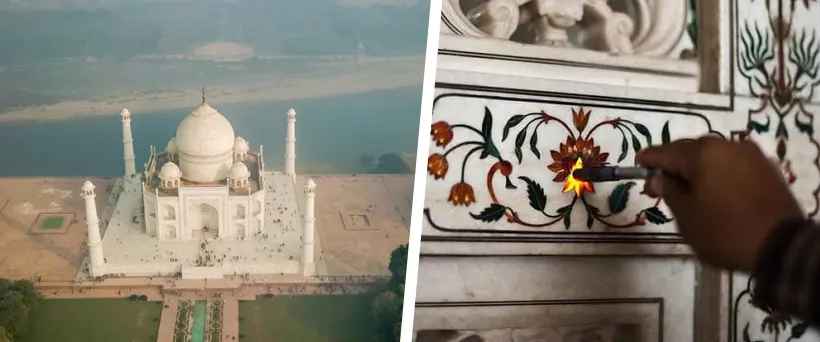
Inlaid Stone Work (Pietra Dura)
Amongst many other stunning pieces of artistry found at the Taj Mahal is the unique stone inlay work that goes by the name of pietra dura. Stones were inserted into marble panels, creating patterns made of precious gems.
Arabic Quranic Inscription
The Taj Mahal has its walls and gateway adorned with beautiful Arabic calligraphy in order to keep a proportional aesthetic from any vantage point.
Charbagh Garden Plan
The Charbagh garden plan was used in the construction of the gardens around the Taj Mahal, as they symbolize paradise. The gardens utilize water channels and pathways to maintain symmetrical harmony.
Dome & Minarets
The iconic dome at the top of the Taj Mahal is arguably one of its most impressive features. In addition, four ornate minarets surround the tomb of the deceased emperor.
Best Time to Visit the Taj Mahal
It is recommended that the Taj Mahal be visited between October and March since there will be no excessive temperatures that could cause difficulty while enjoying the beauty of the monument.
October - March
This is the most recommended period since mornings tend to be cool, and there is an overall beauty in the monument during this period.
April – June
There are extremely high temperatures in Agra during summer; therefore, the best period would be in the mornings. This period will be suitable for the economic tourists or short holidays.
July – September
It is the monsoon period, and the skies are usually cloudy with greenery; however, it can ruin travel plans at times.
Taj Mahal Timings & Opening Days
The Taj Mahal is normally open from sunrise to sunset. It closes on Fridays for general public visits.
Taj Mahal Opening Hours
- Opening Hour: Sunrise
- Closing Hour: Sunset
- Days Closed: Friday
Night Visits
Visitors can view the Taj Mahal at night during specified full moon days by making prior reservations.
Taj Mahal Ticket Price
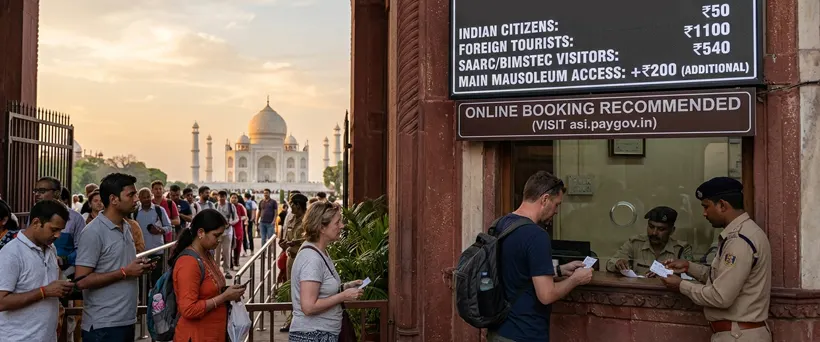
The cost of Tickets at the Taj Mahal depends upon the nationality of the visitor as well as the areas from which they have access. Prices are subject to change anytime, and it is advised to cross-check the price information from reliable sources like government websites.
Approximate Cost of Tickets
- For Indians: ₹50
- Foreigners: ₹1100
- SAARC/BIMSTEC Citizens: ₹540
- Mausoleum Area Access: Extra ₹200
Online ticket booking is advisable during weekends, public holidays, or tourist seasons.
Best Entry Gates for Visiting the Taj Mahal
Taj Mahal has several entrance gates, and selecting the right entrance gate may help you save time, especially during sunrise or peak tourist hours.
- East Gate: Preferred by tourists who stay at hotels, and relatively better for tourists
- West Gate: Used by locals and often crowded
- South Gate: Relatively less preferred and often not suitable for first-timers
How to Reach the Taj Mahal
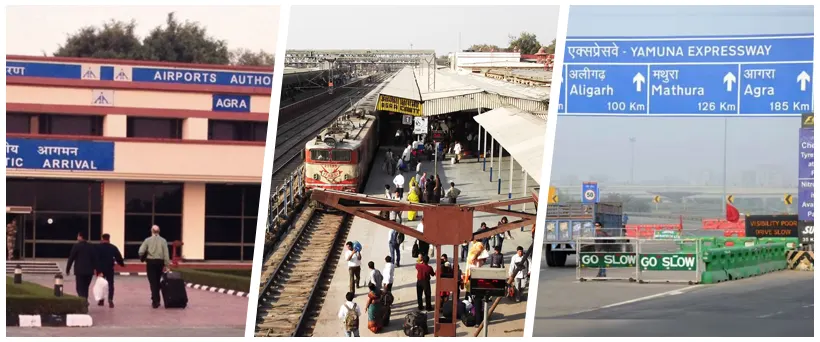
The Taj Mahal is situated in Agra, Uttar Pradesh, and can be accessed via road, rail, and air routes. Most of the international tourists traveling to Agra travel by rail or road after reaching Delhi.
By Air
As there is no connectivity to an international airport at Agra, the tourists usually take flights to reach Delhi Airport.
By Rail
Agra Cantt is the most important railway station with some top tourist trains from Delhi like Gatimaan Express & Shatabdi Express.
By Road
The distance between Delhi and Agra via the Yamuna Expressway is covered in approximately 3-4 hours, based on traffic conditions.
Those who prefer to have their tour package booked, including transport and guide in one booking, can choose Agra tour packages from Dazon Travels.
Local Transportation in Agra
Traveling around Agra is relatively simple since all the popular landmarks are located within reachable distances. The travelers have various means of transportation available depending on their comfort level and budget.
Some modes of transportation include:
- Auto Rickshaws
- E-Rickshaws
- App-Based Taxis
- Tourist Taxis
- Cycle Rickshaws
Electric-powered transport is widely used in the Taj Mahal region to reduce pollution levels in that area.
Best Places to Visit Near the Taj Mahal
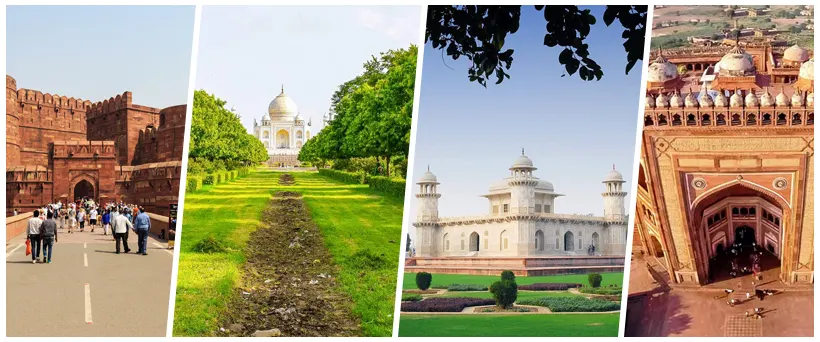
Other major tourist attractions apart from the Taj Mahal that Agra boasts of include various historical sites. The majority of these sites can be visited in a couple of days, making it a good place for history enthusiasts.
Agra Fort
This site, a UNESCO World Heritage Site, is regarded as one of the country’s major Mughal fortresses. Constructed using red sandstone, it enables visitors to have a better understanding of Mughal rulers and their significance.
Attractions here include:
- Red sandstone buildings
- Palaces
- Historical rooms
- View of the Taj Mahal
Mehtab Bagh
Mehtab Bagh is situated on the opposite side of the Yamuna River. It presents an ideal spot to view the distant Taj Mahal, particularly during evenings when it glows due to the setting sun.
Popular for :
- Sunset photoshoots
- Riverside surroundings
Itimad-ud-Daulah (Baby Taj)
The Itimad-ud-Daulah is often referred to as the “Baby Taj” because of its marble decorations and elegant Mughal designs. The monument is less crowded than the Taj Mahal and offers visitors an intimate view of early Mughal marble artistry.
Famous for:
- Elegant marble artistry
- Mughal design
- More intimate tourist destination
Fatehpur Sikri
Fatehpur Sikri is about 35-40 km away from Agra and served as the capital city of Emperor Akbar. The destination is perfect for tourists looking to explore the history and architecture of the Mughals.
The top tourist attractions are:
- Buland Darwaza
- Jama Masjid
- Mughal courtyards
- Architectural history
- Sikandra (Tomb of Akbar)
Sikandra is where Emperor Akbar lies in rest. The site is famous for its serene gardens and mixed architecture. It is a great destination for tourists who wish to explore more Mughal history apart from the Taj Mahal and Agra Fort.
Best Areas to Stay in Agra
Agra provides accommodations that cater to all types of travelers. Selection of the appropriate location will make sightseeing more convenient, particularly for those wanting to visit the Taj at sunrise.
Luxury Hotels
- For accommodation facing the Taj, access to rooftop dining, and luxurious amenities. Common locations are Taj East Gate Road and Fatehabad Road.
- The Oberoi Amarvilas: Luxury hotel nearest the Taj, offering magnificent views of the monument from most of its rooms
- ITC Mughal: Grand resort modeled after the Mughals, featuring a garden, spa, and restaurants
- Taj Hotel & Convention Centre: A trustworthy choice for high-end accommodation with excellent services
Medium Range Hotels
These are hotels suitable for family and couple accommodation, mainly in areas such as Tajganj and Fatehabad Road.
- Crystals Hotel — a well-rated medium-range hotel located in the vicinity of the East Gate
- Hotel Kamal — preferred by individual tourists owing to its rooftop view of the Taj at reasonable rates
- Radisson Agra — reputable chain offering reliable standards in an ideal location
Budget Hotels and Hostels
Economical options available for individual travelers, backpackers, and shorter tours.
- Hotel Sheela — a traditional budget hotel located close to the South Gate
- Zostel Agra — preferred choice for backpacker hostels with social facilities
- Sidhartha Hotel — a basic hotel providing easy access to the Taj area

Famous Food in Agra
The food culture of Agra can be traced back to Mughal influence, North Indian cuisines, and street food. This city has much to offer to both casual tourists and food enthusiasts.
Petha
Petha is the most renowned sweet of Agra and can be found in various flavors. Tourists love this sweet as souvenirs to take home.
Mughlai Cuisine
The Mughlai food of Agra is inspired by the royal background of the city and is characterized by its rich flavors, slow cooking, and aromatic spices.
Some examples of Mughlai food are :
- Kebabs
- Biryani
- Korma
- Tandoori food
Bedai & Jalebi
This is a typical breakfast combination and is extremely popular among people. It is best enjoyed in the old markets of the city.
Street Food in Agra
If you are interested in exploring the local cuisine through a casual experience, then there is no better place than Agra.
Some popular street foods are:
- Chaat
- Kachori
- Samosa
- Dahi Bhalla
Shopping Near the Taj Mahal
Shopping around the Taj Mahal allows visitors to carry back something unique from the craft tradition of Agra.
Some popular things that can be purchased here include :
- Marble handicrafts
- Leather items
- Miniature Taj Mahal
- Handicrafts
- Decors
Popular markets for shopping in Agra include :
- Sadar bazaar
- Kinari bazaar
- Taj Ganj Markets
Agra Culture & Local Experience
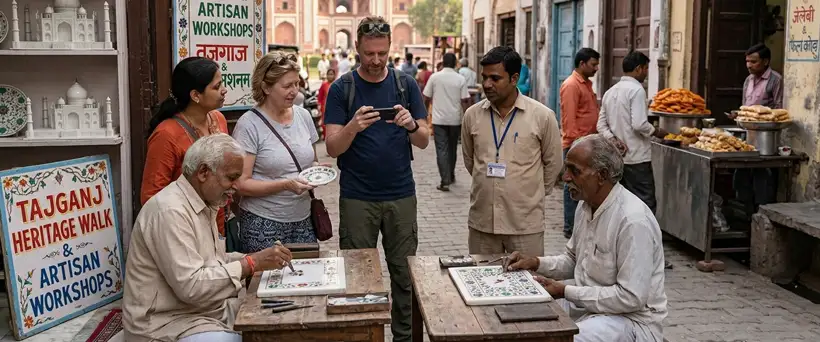
The culture of Agra is heavily influenced by its Mughal past, traditional handicrafts, cuisine, and heritage architecture. Apart from monuments, there are other elements in the city that can give travelers insights into its artistic and cultural background.
Travelers usually indulge in the following activities:
- Heritage walk
- Storytelling about the Mughals
- Food tour
- Workshops of artists
Suggested 2-Day Taj Mahal Itinerary
The two-day trip gives visitors a chance to explore the Taj Mahal leisurely, along with visiting other significant monuments of Agra, trying out the local cuisine, and shopping at the local bazaars. Such a travel plan seeks to circumvent the harsh weather conditions, capitalize on the perfect light of the golden hour, and ensure that you get time to enjoy each destination instead of rushing to see everything. However, if one opts for an easier arrangement for such trips, Dazonn Travels provides highly rated Agra tours.
Day 1 — Taj Mahal & Central Agra
5:45 AM – 8:30 AM
Arrive at the East Gate before 5:45 AM in order to enter through the gate before sunrise. This first hour in the complex is actually quite different, with soft sunlight, few people, and quiet surroundings that disappear due to the influx of visitors at noon. Enjoy this time while walking around the gardens, reflecting pool, and inside the mausoleum.
9:00 AM – 10:00 AM
Have breakfast either in a cafe near the East Gate or at the hotel. It is important to have a little rest before the second half of the day starts.
11:00 AM – 1:00 PM
Go to Agra Fort, which is approximately 2.5 km from the Taj Mahal. Agra Fort itself is a UNESCO World Heritage Site, and you will be able to see such places as the Diwan-i-Am, Diwan-i-Khas, and the tower from which Shah Jahan used to admire the Taj Mahal.
1:30 PM – 3:30 PM
Lunch and break at the hottest time of the day. Agra, between 1 PM and 4 PM, will be most comfortably spent indoors. The logic behind this is similar for most locals.
4:30 PM – 6:30 PM
Visit Mehtab Bagh, which stands on the opposite side of the river from the Taj Mahal. This is the place where photos of sunset will be taken as the monument lights up the sky with warm hues of orange. The view is quite secluded and can be reached within a half-hour journey via taxi from Agra Fort.
7:00 PM and onwards
Roam around Sadar Bazaar or Taj Ganj market areas. Have some chaat, purchase Petha as souvenirs, and take a stroll.
Day 2 — Heritage & Local Culture
7:00 AM – 9:00 AM
Explore the Baby Taj, officially known as Itimad-ud-Daulah. This will give you a unique opportunity to view the intricate details of early Mughal-era marble craft without all the noise and visitors at the primary site. The pietra dura here is absolutely exquisite and should be observed up close without any pressure from the crowds.
9:30 AM – 10:30 AM
Have breakfast at a cafe nearby, preferably in the historic district. Make sure that you try the traditional breakfast of Bedai and Jalebi if you haven’t yet done so. Old-city cafes offer this combination on their menu throughout the day.
11:00 AM – 3:30 PM
Day-trip to Fatehpur Sikri, which is a 35-40 km drive away. Hire a taxi to take you there; you’ll spend about 45 minutes on the road each way. Take at least an hour and a half to explore the Buland Darwaza, Jama Masjid, and Mughal courtyard. Fatehpur Sikri used to be the imperial capital of Akbar the Great.
4:00 PM – 5:30 PM
Head back to Agra city. You can spend your time refreshing yourself, packing some souvenirs, or just relaxing under the open skies, enjoying a view of the Taj Mahal for one last time.
6:00 PM – 8:00 PM
Walk around in search of food. End your tour with Mughlai kababs and street chaat, along with one final trip to buy some Petha.
Common Mistakes Tourists Make at the Taj Mahal
Even for prepared travelers, mistakes happen. Here are some things that should be avoided.
Traveling on a Friday – The Taj Mahal closes to tourists every Friday. This is missed more often by tourists than one may imagine, including those on day-long trips from Delhi. Make sure of this before making any bookings for the train.
Forgetting Your ID Proof – Without an ID proof with your photograph, there is simply no way in. Passport for foreigners, and Aadhar/PAN for locals.
Arriving Late – The hours from 9 to 11 are hot, crowded, and hard on photography. Sunrise timings offer a pleasant breeze, less crowding, and beautiful sunlight.
Hiring an Unofficial Guide – Any guide who approaches you aggressively outside the gate is probably unlicensed by the government. Kindly turn down the offer.
Choosing the Wrong Footwear – Before reaching the marble platform, you have to take off your footwear. Boots or complex laces can be troublesome. Wear slip-on shoes.
Not Purchasing the Taj Mehtab Bagh Ticket — Entry into the interior part is charged separately and does not come with the general ticket price. Clarify during your booking.
Bringing Restricted Objects — Selfie sticks, tripods, large baggage, and food products are not allowed inside. Keep them in your hotel room.
Missing the Taj Mehtab Bagh — The finest sunset view of the monument is actually from the opposite bank of the river. It takes 15 minutes to get there. Every moment spent there is worth the visit.
Moving Too Fast — Allocate a minimum of 2.5 to 3 hours for visiting. There are intricate designs, calligraphic patterns, and gardens that need some leisure time.
Underestimating the Hot Weather — Summer temperatures in Agra cross 42°C. Visiting during May-June? Early morning is essential here.
Important Travel Tips for Visiting the Taj Mahal
A bit of planning on your end can ensure that your trip to the Taj Mahal is smooth and enjoyable, particularly if you are traveling during peak hours or visiting Agra on the same day from Delhi.
- Always try to book tickets for sunrise visits as they have better climatic conditions and fewer crowds.
- Carry mobile wallets or some cash for transportation and local markets.
- Visit the site during weekdays rather than weekends and national holidays.
- Include Agra Fort and Mehtab Bagh together to save your time traveling around the city.
What Not to Carry Inside the Taj Mahal
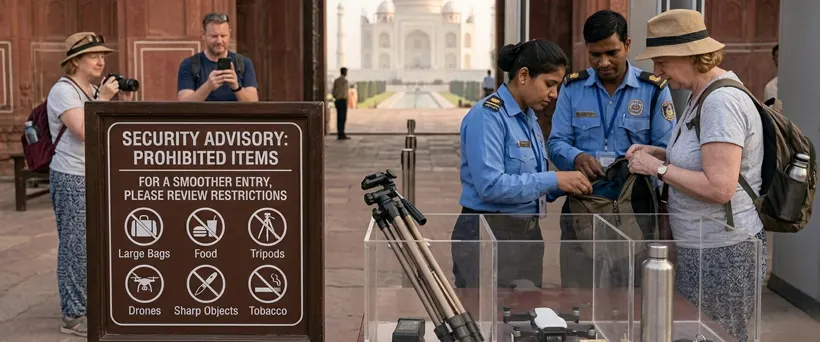
Security screening is rigorous; hence, one should never carry prohibited items. Keeping your luggage light will help you gain entry easily.
Do not bring :
- Heavy baggage
- Food products
- Tripods
- Drone
- Tobacco products
- Sharp objects
- Additional electronics that are not required during your stay
Is the Taj Mahal Worth Visiting?
Undoubtedly. This is one of the rare locations that actually delivers on worldwide expectations. Apart from the fact that it is beautiful, there is history, architectural genius, culture, and an aura of calm that is difficult to appreciate only through pictures.
No matter whether your interests revolve around history, photography, architecture, cuisine, or cultural tourism, visiting the Taj Mahal is about as close as you can get to one of the cultural wonders of the world without actually being there.
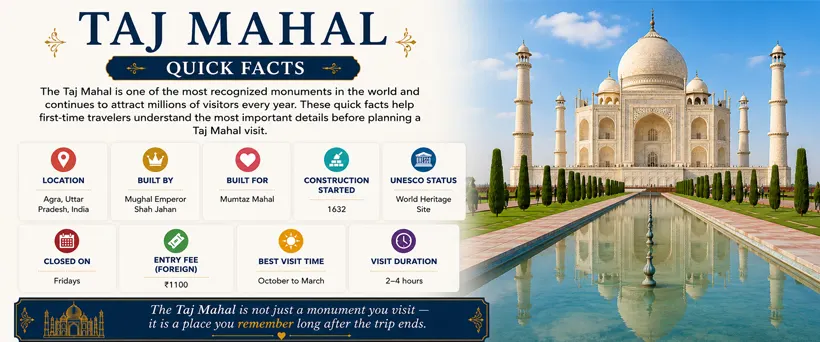
Taj Mahal Quick Facts
The Taj Mahal is one of the most recognized monuments in the world and continues to attract millions of visitors every year. These quick facts help first-time travelers understand the most important details before planning a Taj Mahal visit.
| Location | Agra, Uttar Pradesh, India |
| Built By | Mughal Emperor Shah Jahan |
| Built For | Mumtaz Mahal |
| Construction Started | 1632 |
| UNESCO Status | World Heritage Site |
| Closed On | Fridays |
| Entry Fee (Foreign) | ₹1100 |
| Best Visit Time | October to March |
| Visit Duration | 2–4 hours |
Frequently Asked Questions
It’s Mughal architecture, marble construction, and the legend of Shah Jahan constructing it to commemorate Mumtaz Mahal.
Yes – The Gatimaan Express will get you there in less than 2 hours. Leave at 8 AM and return in time to see the sunset in the evening.
Outside, yes; inside no. No tripods and selfie sticks anywhere in the complex.
Petha, Bedai-Jalebi, Mughlai kebabs, and local street chaat are the ones that you must try.
Delhi Airport is the most convenient for foreigners. Agra Airport is there, but it does not have flights to many destinations.
Agra Fort, Mehtab Bagh, Baby Taj, Fatehpur Sikri, and Sikandra – All can be covered in 2 days.