
Table of Contents
Understanding the APAC Region for Modern Travelers
APAC is more than a set of regional initials – it stands for almost half the people in the world, thousands of languages, and some of the most exciting travel experiences on the planet.
From the monasteries of the Himalayas that hug the outskirts of Kathmandu to the bright lights of Seoul and the sleek skyscrapers of Tokyo, the Asia-Pacific region combines deep spiritual roots with cutting-edge innovation.
Whether you’re searching for the APAC meaning, organizing a trip that takes you across multiple countries, or trying to figure out which countries in the APAC region are best to visit, this definitive guide has it all.
What Does APAC Stand For?
APAC is an acronym for Asia-Pacific
It is a geographic term that refers to the region of Asia and the Pacific Ocean, including East Asia, Southeast Asia, South Asia, Australia, New Zealand, and Pacific Island nations.
- APAC = Asia + Pacific
- More than 40 countries
- Covers several continents and time zones
- Fastest-growing tourist destination in the world
APAC Region Countries
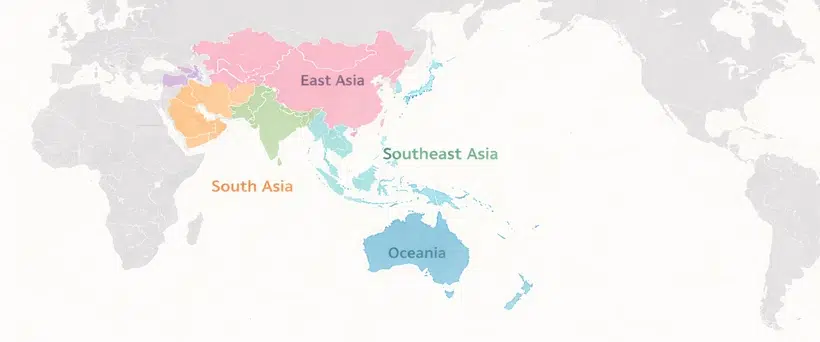
APAC is not only a popular region of the world for tourists, but it also attracts a large number of companies to host their meetings and events. The APAC region comprises over 40 countries in the major travel regions of Asia and the Pacific.
| Sub-Region | Countries | Travel Highlights |
|---|---|---|
| East Asia | China, Japan, Mongolia, North Korea, South Korea, Taiwan, Hong Kong, Macao | High-tech cities, ancient temples, rich cultural heritage, modern infrastructure |
| Southeast Asia | Brunei, Cambodia, Indonesia, Laos, Malaysia, Myanmar, Philippines, Singapore, Thailand, Timor-Leste, Vietnam | Tropical beaches, island hopping, vibrant nightlife, affordable travel, street food culture |
| South Asia & Oceania | Afghanistan, Bangladesh, Bhutan, India, Maldives, Nepal, Pakistan, Sri Lanka, Australia, New Zealand, Fiji, Papua New Guinea, Solomon Islands, Vanuatu, Samoa, Tonga, Kiribati | Himalayan landscapes, spiritual tourism, luxury islands, wildlife adventures, scenic road trips |
Why the APAC Region Is One of the Best Travel Zones in the World
The Asia-Pacific region offers a degree of diversity that simply cannot be found anywhere else in the world, and this degree of diversity is found in such a large geographical area.
- Cultural Density: More than 40 countries with unique cultures
- Geographic Contrast: Snow-capped mountains to tropical reefs
- Cost Flexibility: Backpacker trails to luxury resorts
- Culinary Richness: Street food to Michelin-starred restaurants
Must-Visit Places in the APAC Region
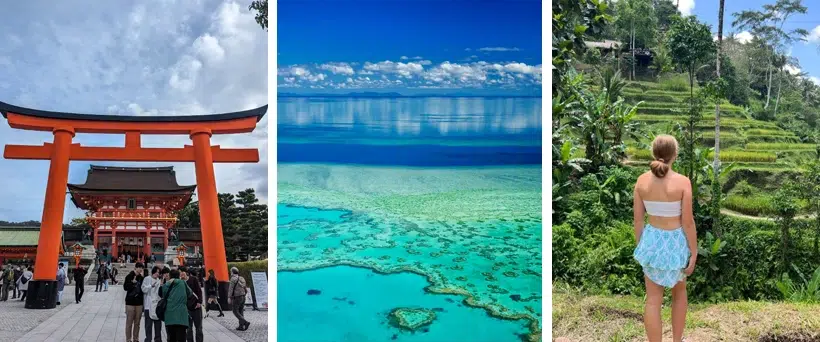
- Japan (Tradition Meets Technology): Visit the famous red torii gates of Kyoto, enjoy the view of Tokyo from Tokyo Skytree, and ride the high-speed train.
- Thailand (Beaches & Culture): Relax in Phuket, explore markets in Bangkok, and island-hop in the Andaman Sea.
- Bali, Indonesia (Wellness & Luxury): Relax in private villas near the rice fields of Ubud, surf in Canggu, and discover holy sites such as Uluwatu Temple.
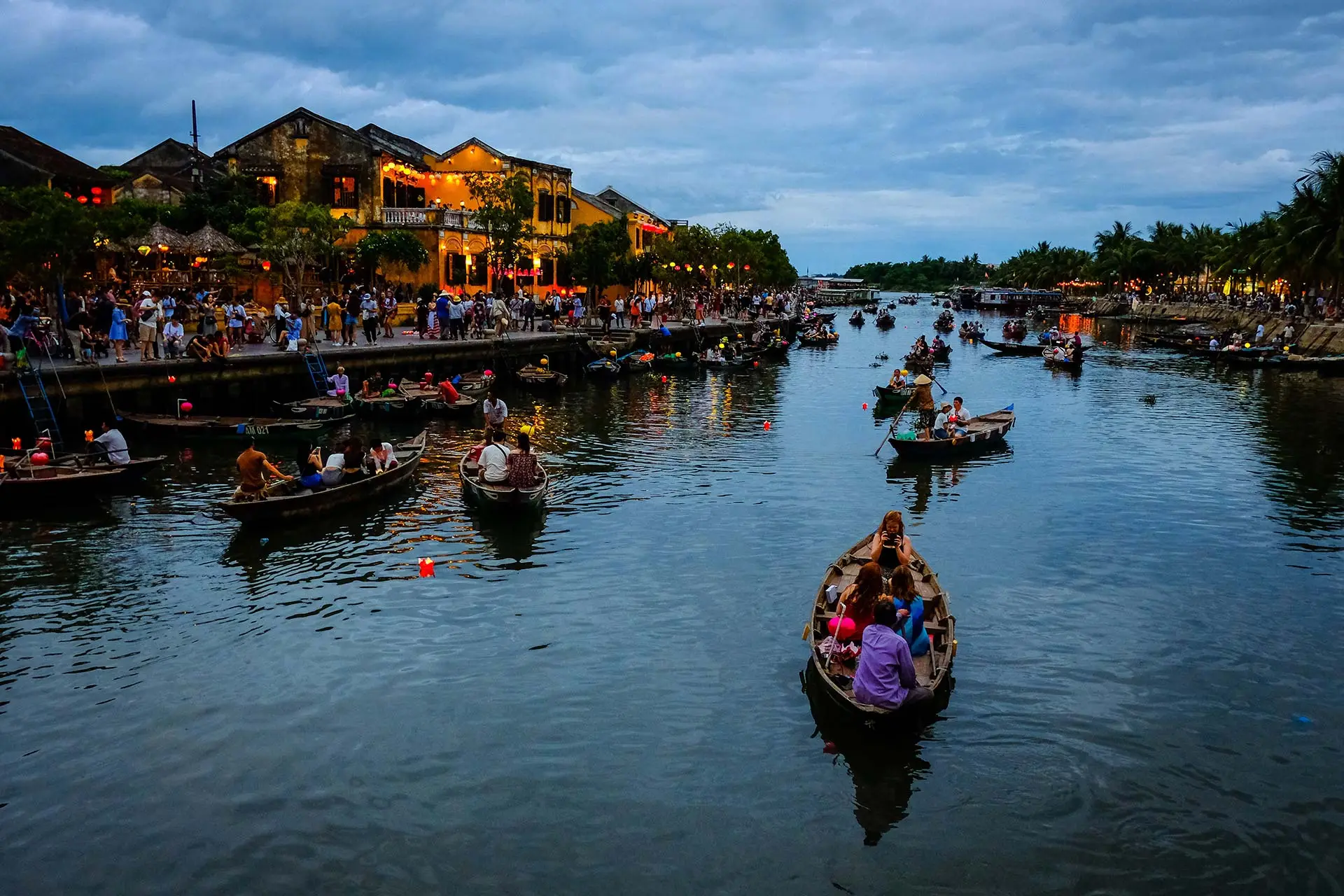
- Vietnam (Budget Traveler’s Paradise): Visit Ha Long Bay by cruise and walk through the lantern-filled streets of Hoi An.
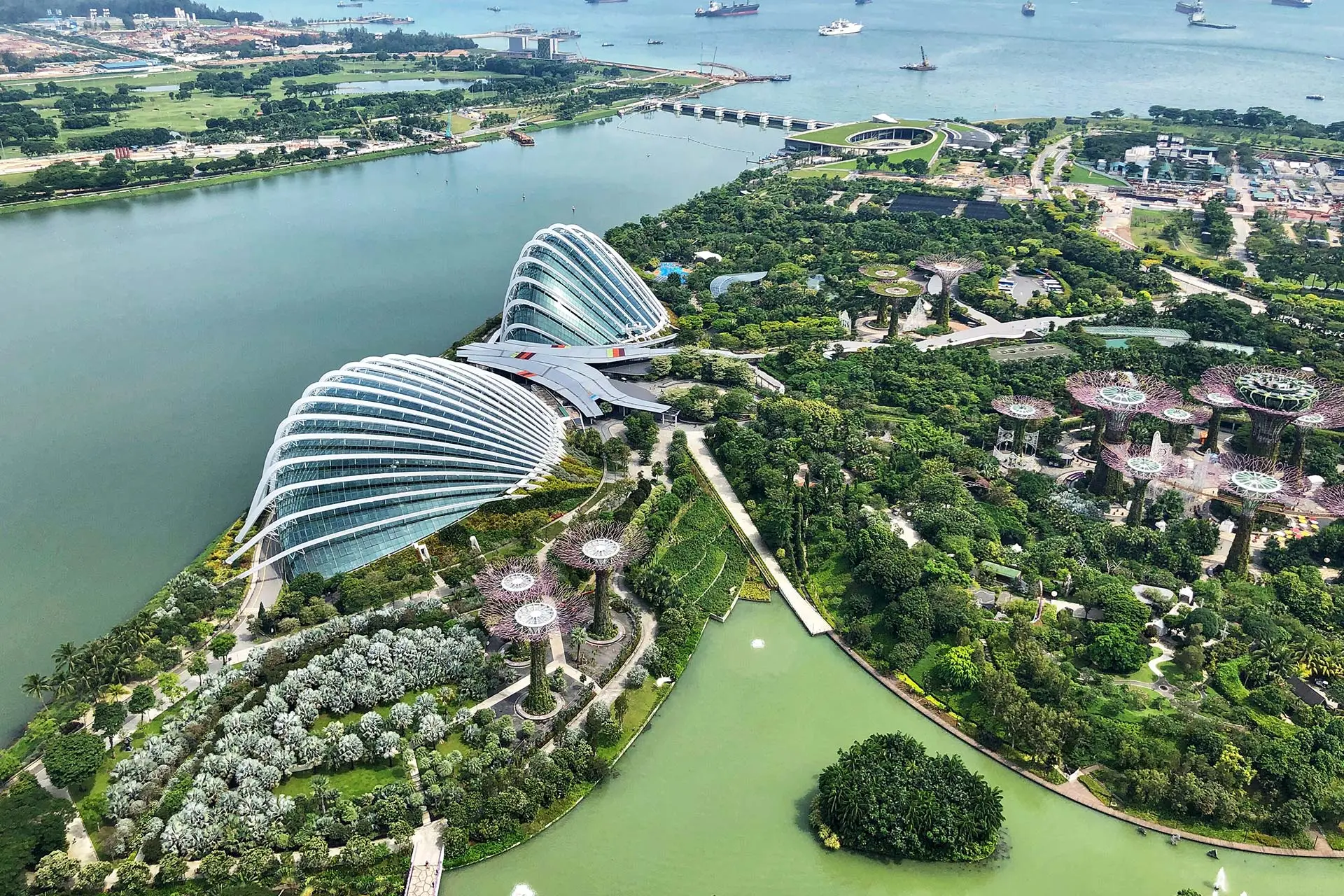
- Singapore (Asia’s Modern Gateway): Visit Gardens by the Bay and experience one of the cleanest and safest travel destinations in the world.
- Australia (Nature & Adventure): Snorkel in the world-famous Great Barrier Reef or admire the sails of the Sydney Opera House while discovering the vibrant coastal cities.
- Maldives (Luxury Islands): Relax in private overwater bungalows and crystal-clear lagoons in one of the most exclusive travel destinations in the APAC region.
Quick Cultural Etiquette for APAC Travelers
40+ cultures require that one size does not fit all. Remember these “Golden Rules” to travel respectfully:
- Temple Dress Codes (South & Southeast Asia): Always wear your shoulders and knees covered when entering temples in Thailand, Bali, or India.
- The “Shoes-Off” Rule (East Asia): In Japan, Korea, and many homes in the region, it is customary to remove your shoes before entering a house. You can spot a shoe rack at the entrance.
- Mind the Head and Feet (Buddhist Cultures): Refrain from touching the head of someone (it is sacred) or pointing your feet at people or statues of deities (it is the lowest body part).
- The Art of Tipping: Tipping is not customary in Japan or South Korea, and in some cases, it may be confusing. However, tipping is common in Southeast Asia and India.
Travel Smarter: Sustainability & “Destination Dupes”
As tourism grows, overtourism impacts iconic hotspots. Smart travelers are now choosing alternatives that offer similar beauty with fewer crowds.
The Rise of the “Destination Dupe”
| Popular Hotspot | Sustainable Alternative | Why Choose It |
|---|---|---|
| Phuket, Thailand | Krabi or Koh Lanta | Same limestone cliffs, slower pace |
| Bali, Indonesia | Lombok or Raja Ampat | Pristine beaches & world-class diving |
| Agra, India | Hampi or Khajuraho | UNESCO heritage with fewer crowds |
| Ha Long Bay, Vietnam | Lan Ha Bay | Similar karst scenery, quieter cruises |
| Kyoto, Japan | Kanazawa | Authentic samurai districts without overtourism |
Practical Sustainability Tips
Choose locally owned accommodations
- Travel in shoulder seasons
- Avoid single-use plastics
- Support community-based tours
- Respect wildlife and protected reefs
At Dazonn Travels, we believe meaningful travel should benefit both visitors and local communities.
APAC Food Guide — A Culinary Journey
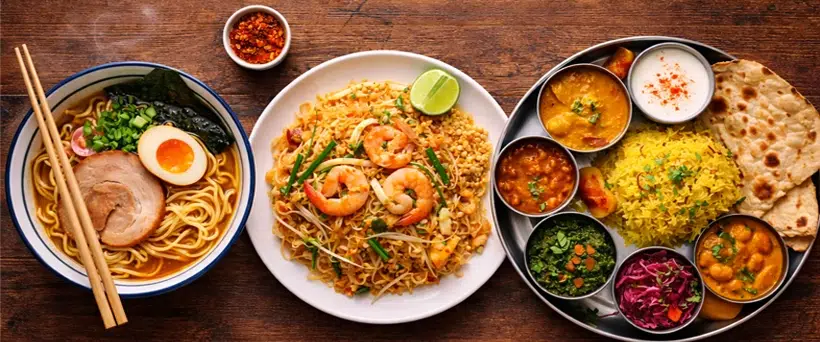
The Asia-Pacific region is home to one of the world’s most diverse and exciting culinary cultures.
- Sushi & Ramen (Japan): Precision and tradition in every bite.
- Thai Curries & Street Food: Bold, layered flavors from Bangkok’s markets.
- Vietnamese Pho: Aromatic broth and fresh herbs.
- Indonesian Nasi Goreng: Caramelized spices rooted in the Spice Islands.
- Singapore Hawker Cuisine: A UNESCO-recognized melting pot of Chinese, Malay, and Indian cuisine.
- Indian Regional Thalis: Dozens of spices served on one colorful plate.
APAC Time Zones Explained (Including PST)
Many travelers planning a trip to the Asia-Pacific region are often confused about the time difference, especially those traveling from North America.
What is PST?
PST (Pacific Standard Time) is a North American time zone used in cities such as Los Angeles, San Francisco, and Vancouver.
It operates at UTC−8 (GMT−8). During daylight saving time (March–November), it shifts to PDT (UTC−7).
Depending on the destination, APAC countries are typically 13 to 18 hours ahead of PST.
APAC vs PST Time Difference
The APAC region spans multiple time zones, so there is no single “APAC time.”
| Location | Time Zone | Difference from PST |
|---|---|---|
| Japan | GMT+9 | +17 hours |
| Singapore | GMT+8 | +16 hours |
| India | GMT+5:30 | +13.5 hours |
| Sydney | GMT+10 | +18 hours |
Pro-Tip: Crossing the International Date Line
When flying westward from North America (PST) to Asia (APAC), you usually arrive one calendar day later because you cross the International Date Line.
Example:
Depart Friday → Arrive Sunday morning.
On your return journey, the opposite happens. Because you fly “backward” through time zones, you may land earlier on the same calendar day you departed.
Example:
Leave Tokyo at 5:00 PM Monday → Arrive in San Francisco at 11:00 AM Monday.
Best Time to Visit the APAC Region

As APAC covers both hemispheres, the time of year varies depending on your destination.
Tropical Destinations (Thailand, Vietnam, Philippines)
The best time to visit is between November and March.
Winter Sports (Japan, South Korea)
Visit in January and February for the best skiing.
Oceania (Australia, New Zealand)
Visit between December and February for your summer.
Spiritual Journeys (India, Nepal)
Visit between October and November for clear skies and festivals.
Pro-Tip: The “Two-Sided” Monsoon
Of course, the guide provides general best times, but it’s essential to remember that many APAC countries have what’s called “split” weather:
- Thailand: When it’s rainy in Phuket (West Coast) in June, it’s often sunny and beautiful in Koh Samui (East Coast).
- Malaysia/Indonesia: Bali is often at its best (dry season) exactly when mainland Southeast Asia is experiencing its peak monsoon (June–August).
Budget Guide for Traveling in APAC
One of the strongest advantages of APAC is flexibility across budgets.
Budget (Under $50/day)
Vietnam, Laos, India, Northern Thailand
Mid-Range ($70–$150/day)
Bali, Malaysia, Sri Lanka, Philippines
Luxury ($250+/day)
Singapore, Maldives, Japan, Australia, New Zealand
APAC Travel Requirements & Essentials

Moving between the borders of over 40 countries requires some planning to ensure a seamless transition from one culture to another. The best way to carry your essentials is to have a digital and physical copy of your important documents.
- Passport Validity: Make sure your passport is valid for at least 6 months and has 3-4 blank pages for visa stamps.
- Visa & ETAs: Look into e-Visas or Electronic Travel Authorizations well in advance, as there is no such thing as the “APAC Visa” and regulations differ by nationality.
- Proof of Onward Travel: Keep a copy of your exit flight itinerary handy, as immigration authorities in Indonesia or Thailand may ask for it.
- Comprehensive Travel Insurance: Get a policy that includes medical evacuation, which is a must for island or mountain exploration in remote areas.
- Connectivity (eSIM): Download an eSIM app before arrival to stay connected from the moment you land, without having to search for SIM cards at the airport.
- Universal Power Adapter: Bring a good-quality universal adapter that accommodates Type A, C, and G power plugs to keep you charged and connected to the different power grids.
- Digital Vault: Store offline copies of your passport and insurance documents on a secure cloud drive to ensure that you are never left stranded without your documents.
APAC at a Glance
- Region: Asia-Pacific
- Countries: 40+
- Time Zones: GMT+5:30 to GMT+12
- Travel Style: Budget to ultra-luxury
- Ideal Trip Length: 10–21 days
About Dazonn Travels
At Dazonn Travels, we are experts in making Asia-Pacific travel planning easier. Whether you are planning a multi-country trip or need visa information and destination experiences, we assist you in exploring APAC in a hassle-free manner.
Organizing a multi-country trip to Asia-Pacific can be a daunting task, with factors such as currencies, entry requirements, and seasonal changes.
Why APAC Should Be Your Next Travel Adventure

The Asia-Pacific region has one of the most diverse travel ecosystems in the world. Whether it is ancient temples and spiritual retreats, tropical islands, or futuristic cities, the APAC region has the best of everything in one place.
There is no other region in the world that has this much diversity in one travel ecosystem. If you are looking for a travel experience that has culture, cuisine, coastline, and cutting-edge cities in one place, then APAC is the destination for you.
Frequently Asked Questions
APAC stands for Asia-Pacific. It is a geographical expression that includes countries in Asia and the Pacific.
No, APAC is not a country. It is a collective name for over 40 countries.
No, APAC includes Asia and the Pacific countries of Australia and New Zealand.
The APAC region includes over 40 countries in East Asia, Southeast Asia, South Asia, and Oceania.
No, APAC includes several time zones, from GMT+5:30 to GMT+12.
APAC is a geographical expression for the Asia-Pacific region. PST stands for Pacific Standard Time, which is a time zone in North America. People traveling between these two regions encounter huge time differences.
Vietnam, India, Laos, and Northern Thailand are some of the cheapest options.